
The Terminator of Construction Safety Incidents: AI chasing preventable mistakes
Imagine a future where hundreds of worker fatalities and accidents on Australian construction sites never happen (171 in the last five years!). A future where more than 50,000 serious injuries are prevented, saving workers from physical impairment, pain, financial hardship, and disrupted livelihoods. Where the industry can reinvest the over $100 billion suffered in economic losses, in that same five-year period – around $21.7 billion every year – instead of watching it disappear into a vortex of preventable medical costs, compensation claims and subsequent project delays.
That future is no longer as far away as it once seemed.
Thousands more have suffered life-altering injuries. For decades, construction and mining safety has relied on reactive measures: an accident occurs, investigations follow, and then policies are adjusted. Too late. But what if we could predict and prevent accidents before they happen?
Now, thanks to artificial intelligence, this is no longer science fiction. It’s a reality transforming safety in construction.
A harsh reality: Construction safety in Australia
The construction industry is one of Australia’s largest and most dangerous sectors, employing over 1.3 million workers. Every year, thousands of injuries occur, and in 2023 alone, 45 workers lost their lives on Australian construction sites.
The serious injury rate in construction sits at 16.9 claims per 1,000 workers, far exceeding the national all-industry average of 10.5. With over 445,000 construction sites across Australia, these numbers reflect an industry grappling with high levels of risk.
Yet, the construction sector remains slow to adopt new technologies or embed work practices (or site management software and devices) that may have seemed unconventional 20 years ago but which are easily available, ready-to-use and which can genuinely aid in accident and fatality prevention. While AI is now a part of everything from smartphones to self-driving cars, many job sites still rely on manual safety checks and outdated reporting methods. That needs to change.
AI-Powered prevention through site data analysis
AI is suddenly everywhere. From its early days as the antagonist in Terminator to running in your mobile phone, your car, your work meetings and even your fridge, AI has become part of daily life. But what if instead of hunting people down as it did in Terminator, what if AI sought to seek and destroy accidents instead?
This too, is becoming more of a reality. It was only a matter of time before AI engineers turned their focus to the issue of worker safety, leading to a system with a recall rate of 76% which means it is capable of predicting 76% of months where at least one reportable accident will occur. This breakthrough is achieved through advanced data analytics, machine learning, and the fastidious monitoring of over 80 safety indicators, including:
- Permit approvals and safety compliance processes
- Site inspections and observations
- Incident reports and near-miss tracking
Worker hours and overtime trends
Prescience Technology’s vendor partner for safety, quality and site digitisation, Novade Solutions, developed this revolutionary AI engine by training its model on nearly two years of real-world construction data, achieving a system has an 88% precision rate (meaning that when it predicts an accident, it is correct 88% of the time). This ensures safety managers can focus on the most critical risks, acting before incidents escalate into serious accidents.
At the heart of this predictive capability is Novade Safety: This solution digitises and automates safety processes on construction sites, capturing and analysing field data in real time. By combining AI-driven insights with on-the-ground digital tools, Novade Safety helps managers move beyond compliance and into a proactive, data-driven safety culture. The result? Safer workers, fewer accidents, and a construction industry that no longer accepts workplace injuries as the norm.
The best part is how every permit approval, inspection, and incident report feeds into the AI model, continuously refining its ability to detect high-risk situations. Unlike the AI behind Terminator’s rampage, this AI just learns how to protect human life —and the assets being constructed by our community of construction workers.
Applying Novade’s AI model at an industry-wide level could have a transformational impact. If implemented across Australia’s construction sector, we have the potential to:
- Prevent 18 out of 24 annual fatalities
- Avoid thousands of injuries that disrupt lives and livelihoods
- Eliminate billions in economic losses due to downtime, compensation, and medical expenses
Beyond the numbers, there is a human and economic impact
While the financial benefits of AI-driven safety are significant, the human impact is even more critical. Every accident prevented means a worker goes home safely. Every avoided fatality means a life is saved. For employers, fewer accidents mean less downtime, improved worker morale, and a stronger reputation for safety and reliability. But beyond that, it builds confidence, not just in compliance, but in the ability to run safer, smarter, and more efficient projects.
At Prescience Technology, we believe that technology should empower and augment the construction industry, not overwhelm it. Our mission has always been to help businesses take control of risk, make informed decisions, and elevate performance. That’s why we partner with Novade, because we know that real change happens when innovation meets a vital and practical need.
The future of safety is here: it’s proactive, data-driven, and constructed on confidence.
So, AI can save lives (and $)
Numbers don’t lie. The potential to save tens of lives a year, prevent thousands of injuries, and cut billions in economic losses is a reality that AI-powered construction safety can deliver to Australian construction, TODAY.
In The Terminator, AI became humanity’s greatest threat. Instead in our world, AI is working for us, not against us. The technology exists. The data supports it.
Now, the only question is: How soon will you take action?
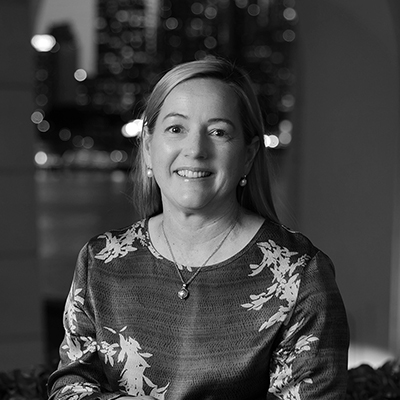
Loretta Bayliss is the founder and Group CEO of Prescience Technology, a consultancy firm specialising in Project Controls for Capital Projects across Australia and Southeast Asia.
With two decades of experience advising on complex delivery environments, Loretta brings a practical, human lens to transformation—focused on building capability, restoring control, and delivering outcomes that last.
Find more of her content:
www.linkedin.com/in/lorettabayliss